Group Show
Lillian BASSMAN, Vivian MAIER, William KLEIN, Aurore de la Morinerie, Sarah MOON, Issei SUDA, Sakiko NOMURA, Keiichi INAMINE (Kochishun)
GALLERY HOURS | Tue.–Sat. 11:00–19:00 (Sat. 13:00–14:00 CLOSED)
CLOSED | Sun-Mon., National Holidays
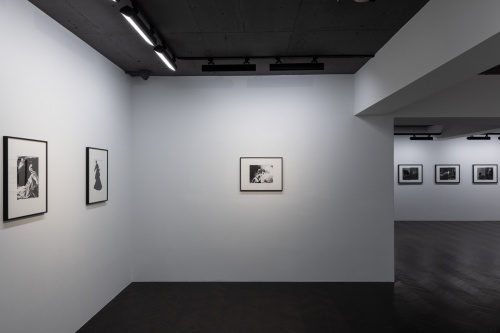
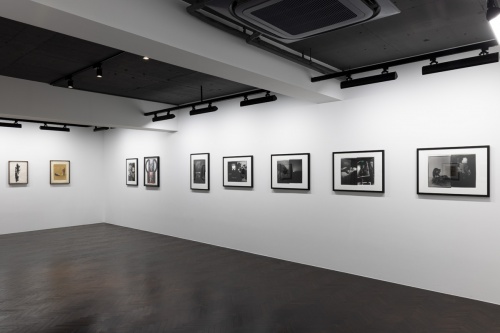
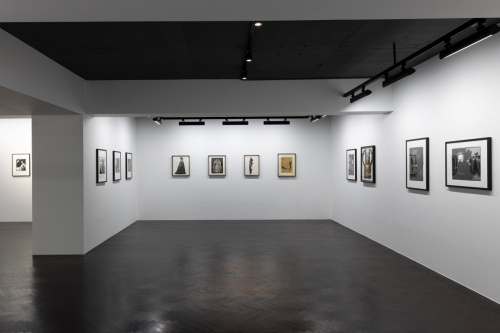
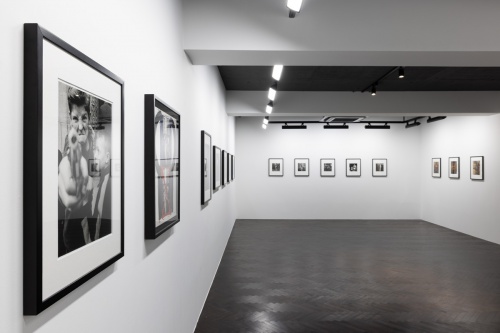
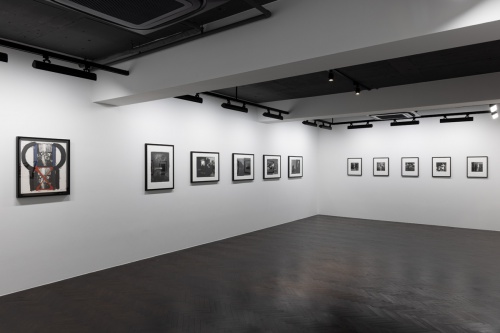
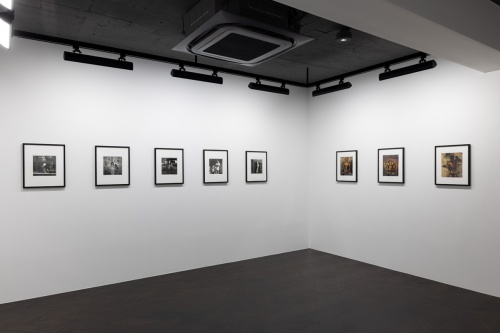
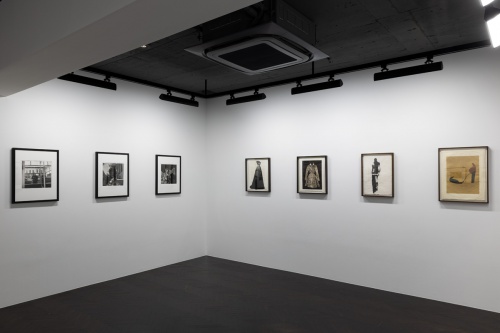
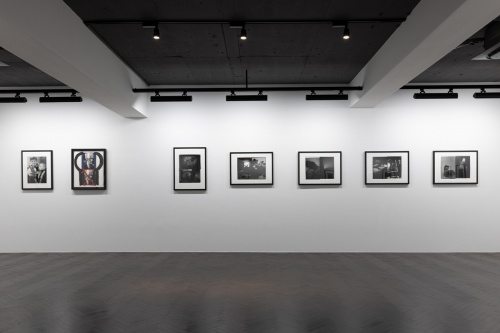
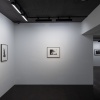
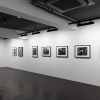
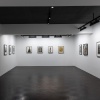
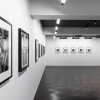
Akio Nagasawa Gallery Ginza is pleased to present a group exhibition featuring works by eight artists.
The exhibition brings together works by artists who have previously been presented by the gallery, including Lillian Bassman, whose solo exhibition at the gallery is scheduled for the future.
We invite you to experience this diverse selection of works, each distinguished by its own unique perspective and artistic expression.
Press images:
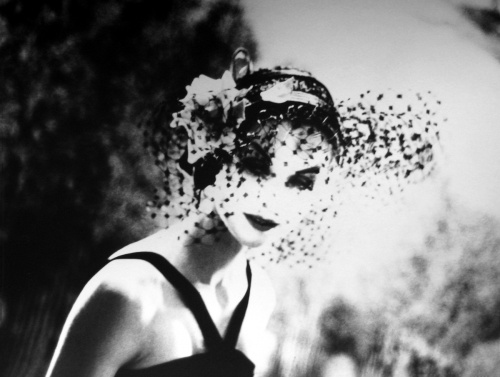
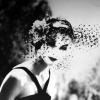
Lillian Bassman
Anne Saint Marie, Chanel Advertising Campaign, 1958 (printed later), Gelatin silver print
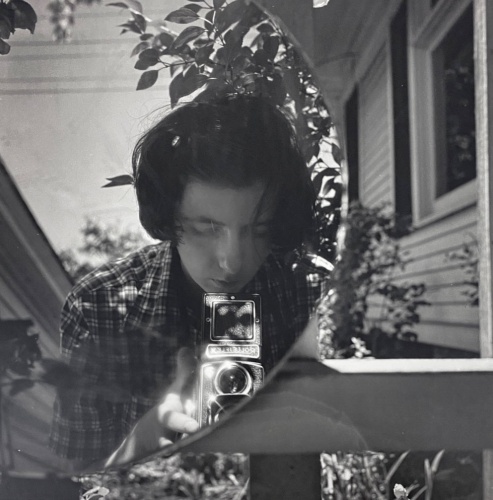
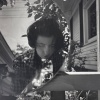
Vivian Maier
0143304. Untitled, Self-portrait, 1953 (printed later), Gelatin silver print
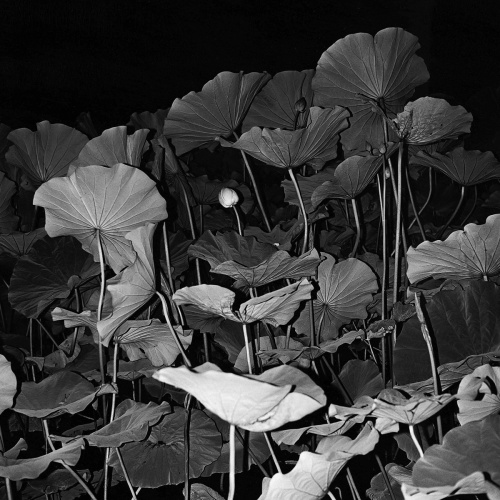
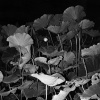
Issei Suda
Ueno, Tokyo, from Fushikaden, 1975 (printed in 2012), Gelatin silver print
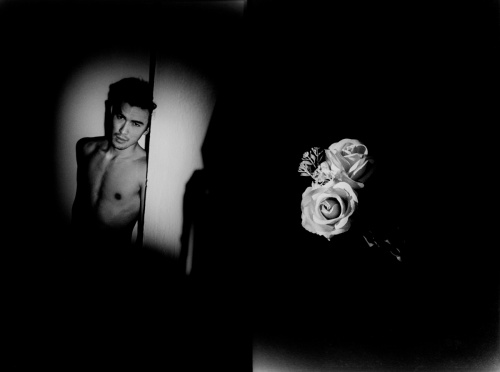
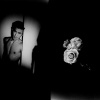
Sakiko Nomura
Lirio, 2025, Lambda print
Artists
Lillian BASSMAN
リリアン・バスマン
Ms. Bassman entered the world of magazine editing and fashion photography as a protégé of Alexey Brodovitch, the renowned art director of Harper’s Bazaar. In late 1945, when the magazine generated a spinoff called Junior Bazaar, aimed at teenage girls, she was asked to be its art director, a title she shared with Mr. Brodovitch, at his insistence. In addition to providing innovative graphic design, Ms. Bassman gave prominent display to future photographic stars like Richard Avedon, Robert Frank and Louis Faurer, whose work whetted her appetite to become a photographer herself.
Already, at Harper’s Bazaar, she had begun frequenting the darkroom on her lunch hours to develop images by the great fashion photographer George Hoyningen-Huene, using tissues and gauzes to bring selected areas of a picture into focus and applying bleach to manipulate tone.
“I was interested in developing a method of printing on my own, even before I took photographs,” Ms. Bassman told B&W magazine in 1994. “I wanted everything soft edges and cropped.” She was interested, she said, in “creating a new kind of vision aside from what the camera saw."
When Avedon went off to photograph fashion collections in Paris in 1947, he lent her his studio and an assistant. She continued her self-education and in short order landed an important account with a lingerie company. In its last issue, in May 1948, Junior Bazaar ran a seven-page portfolio of wedding photographs she had taken, titled “Happily Ever After.”
Ms. Bassman became highly sought after for her expressive portraits of slender, long-necked models advertising lingerie, cosmetics and fabrics. Her lingerie work in particular brought lightness and glamour to an arena previously known for heavy, middle-aged women posing in industrial-strength corsets.
“I had a terrific commercial life,” Ms. Bassman told The New York Times in 1997. “I did everything that could be photographed: children, food, liquor, cigarettes, lingerie, beauty products.”
Lillian Violet Bassman was born on June 15, 1917, in Brooklyn and grew up in the Bronx. Her parents, Jewish émigrés from Russia, allowed her a bohemian style of life, even letting her move in, at 15, with the man she would later marry, the documentary photographer Paul Himmel.
Ms. Bassman studied fabric design at Textile High School, a vocational school in the Chelsea section of Manhattan. After modeling for artists employed by the Works Progress Administration’s Federal Art Project and working as a muralist’s assistant, she took a night course in fashion illustration at Pratt Institute in Brooklyn.
She soon showed her work to Brodovitch, who was impressed. Waiving tuition, he accepted her into his Design Laboratory at the New School for Social Research, where she changed her emphasis from fashion illustration to graphic design.Brodovitch took her on as his unpaid apprentice at Harper’s Bazaar in 1941, but desperate to earn money she left to become an assistant to the art director at Elizabeth Arden, whereupon Brodovitch anointed her his first paid assistant. Like her mentor, she was artistically daring. At Junior Bazaar, she experimented with abandon, treating fashion in a bold, graphic style and floating images in space.
“One week we decided that we were going to do all green vegetables, so we had the designers make all green clothing, green lipstick, green hair, green everything,” she told Print magazine in 2006.
Her nonadvertising work appeared frequently in Harper’s Bazaar, and she developed close relationships with a long list of the era’s top models, including Barbara Mullen (her muse), Dovima and Suzy Parker. The stylistic changes of the 1960s, however, left her cold. The models, too. “I got sick of them,” she told The Times in 2009. “They were becoming superstars. They were not my kind of models. They were dictating rather than taking direction.”
In 1969, disappointed with the photographic profession and her prospects, she destroyed most of her commercial negatives. She put more than 100 editorial negatives in trash bags, putting them aside in her converted carriage house on the Upper East Side of Manhattan. She soon forgot all about them.
By the mid-1970s, she was out of the fashion world entirely and had begun focusing on her own work, taking large-format Cibachrome photographs of glistening fruits, vegetables and flowers, pictures of cracks in the city streets and distorted male torsos based on photographs in bodybuilding magazines. It was not until the early 1990s that Martin Harrison, a fashion curator and historian who was staying at her house, found the long-forgotten negatives. He encouraged her to revisit them. Ms. Bassman took a fresh look at the earlier work. She began reprinting the negatives, applying some of the bleaching techniques and other toning agents with which she had first experimented in the 1940s, creating more abstract, mysterious prints.
“In looking at them I got a little intrigued, and I took them into the darkroom, and I started to do my own thing on them,” she told The Times. “I was able to make my own choices, other than what Brodovitch or the editors had made.”
Her reinterpretations, as she called them, found a new generation of admirers. A full-fledged revival of her career ensued, with gallery shows and international exhibitions, including a joint retrospective at the Deichtorhallen museum in Hamburg with her husband and a series of monographs devoted to her photography. A one-woman show at the Hamiltons Gallery in London, organized by Mr. Harrison in 1993, was followed by exhibitions at the Carrousel du Louvre in Paris and an assignment from The New York Times Magazine to cover the haute couture collections in Paris in 1996. She completed her last fashion assignment for German Vogue in 2004.
Mr. Himmel died in 2009, having abandoned photography in his late 50s to become a psychiatric caregiver in the city’s hospitals and later a psychotherapist in private practice. Besides her son, the editor in chief of Abrams Books, she is survived by a daughter, Liza Himmel, known as Lizzie; two grandchildren; and a step-grandchild.
Ms. Bassman’s work has been published in “Lillian Bassman” (1997) and “Lillian Bassman: Women” (2009). A new book, “Lillian Bassman: Lingerie,” is to be published by Abrams on April 1.
(via Lillian Bassman's obituary "Lillian Bassman, Fashion and Fine-Art Photographer, Dies at 94." Written by William Grimes for The New York Times. Published February 13th, 2012.)

Vivian MAIER
ヴィヴィアン・マイヤー
Vivian Maier was born in New York in 1926. She worked for about 40 years as a nanny, mostly in Chicago's North Shore, while pursuing photography in her free time as an amateur street photographer. During her lifetime, Maier's photographs remained unknown and unpublished until 2009, when her anonymous life as a photographer came to an end. After her death, a Chicago collector named John Maloof got his hand on some of Maier's prints and negatives, and view the remarkable quality of the photographies he decided to put them online which resulted into turning all her works into viral. In 2013, her life and work were the subject of a documentary film “Finding Vivian Maier". Nowadays, her work and her mysterious life keep capturing the interest of many people and her artworks have being shown in art galleries around the world.

William KLEIN
ウィリアム・クライン
Born 1928 in New York. His career as a fashion photographer began in 1955, followed in 1956 by the publication of New York. Breaking taboos in photography, he introduced a new style of audaciously blurry and out-of-focus pictures that went on to influence numerous photographers up to the present day. After New York, the series continued with Roma (‘59), Moscow (’64), and Tokyo (’64). In addition to working as a photographer, he also produced the fashion-related movie Qui etes-vous Polly Maggoo? A solo exhibition at the San Francisco Museum of Modern Art in 1995 established his reputation, which he had mainly earned in Europe, also back home in America. In Japan, the Tokyo Metropolitan Museum of Photography showed the “Paris+Klein” exhibition in 2004, and in 2005, the “William Klein Retrospective” exhibition was held at the Centre Pompidou in Paris. The exhibition “William Klein + Daido Moriyama” with Daido Moriyama at London’s Tate Modern in 2012-13 created a buzz not only in the realm of photography, but in the fashion and film worlds alike.

Aurore de la Morinerie
オロール・ドゥ・ラ・モリヌリ
French artist and illustrator, Aurore de la Morinerie graduated as a fashion designer from the Ecole supérieure des Arts appliqués Duperré, in Paris. At the same time, she attends class of calligraphy and Chinese painting during several years.
Her success as a fashion illustrator is confirmed in the beginning of the 1990’s. She works for Hermès, Alaïa, Chanel, Cartier, Omega, Maison Martin Margiela, Rick Owens, H&M, Aesop, Lancel, Tiffany, Nieman Marcus and Le Printemps department stores… And is a regular contributor to French newspaper Le monde and its weekly supplement issue, the New York Times T Magazine, the American and British issues of Harper’s Bazaar, French ELLE, AD, …
She has been represented by the Gallery Bartsch & Chariau, Munich, till 2018.
She took part to fashion illustrations exhibitions at the London Design Museum in 2010, and Hamburg Kunst und Gewerbe Museum in 2015.In 2011, the Musée de la Mode de la Ville de Paris - Palais Galliera commissionned her a series of monotypes to illustrate the catalogue of the exhibition Azzedine Alaïa. In 2015, for the exhibition La Mode Retrouvée - The wardrobe of the Countess Greffulhe at the Palais Galliera, she realizes a set of drawings presented in the exhibition and reproduced in the catalogue.
Ten works of her series on Azzedine Alaïa are part of the permanent collection of the Graphic Arts of the Palais Galliera.
Photo by ADAGP 2024 _ Photo Agence Mue

Sarah MOON
サラ・ムーン
Born 1941 in France. Started taking photographs while working as a model, and eventually embarked on her career as a photographer in 1970. Her activities range from editorials for fashion magazines and advertisements for fashion brands to the creation of commercials and videos. She won a Grand Prix (Lion d'Or) for her films for Cacharel at Cannes Lions International Advertising Festival (now Cannes Lions International Festival of Creativity) in 1979, and in ’84, the Premio Grafico at the Bologna Children's Book Fair for her interpretation of Little Red Riding Hood. In 1995, she showcased her work in a retrospective exhibition at the Centre National de la Photographie in Paris, and received the Paris Photo Prize. Exhibitions in Japan include shows at Kahitsukan – Kyoto Museum of Contemporary Art in 2002 and 2004. She was awarded the Premio Nadar for Sarah Moon 12345, published in 2008. Her dream-like photographs have been fascinating hordes of fanatical fans around the world. She is one photographer whose exhibition in Tokyo is long overdue.

Issei SUDA
須田一政
Born 1940 in Tokyo. Graduated from the Tokyo College of Photography in 1962. Was hired as house photographer for Shuji Terayama’s experimental theater troupe Tenjo Sajiki in ’67, before commencing his work as a freelance photographer in ‘71. A Newcomer's Award from the Photographic Society of Japan for Fushi Kaden catapulted him into the limelight in 1976. He further received the Photographic Society of Japan’s Annual Award for the exhibition of the “Monogusa Syui” series in 1983, followed in ’85 by the 1st Domestic Photography Award at Higashikawa for “Nichijo no danpen”. In 1997, his book Human Memory received several awards including the Domon Ken Prize. In 2013, his large-scale retrospective exhibition “Nagi no hira – fragments of calm” was shown at the Tokyo Metropolitan Museum of Photography. His works capturing moments between reality and non-reality have lately earned a high reputation also outside Japan. Main photo collections include Fushi Kaden (’78), Waga Tokyo 100 (’79), Akai hana – scarlet bloom (2000), Fushi Kaden (definitive edition, 2012), Anonymous Men and Women (’13) and Rei (’15) and more.

Sakiko NOMURA
野村佐紀子
Born 1967 in Shimonoseki, Yamaguchi. Graduated from Kyushu Sangyo University, Faculty of Fine Arts, Department of Photography and Imaging Arts, and became Nobuyoshi Araki's disciple in ’91. Following her first solo exhibition “Clock Without Hand” in ’93, she participated in numerous solo and group exhibitions mainly in Tokyo but also at locations across Asia and Europe and received high acclaim. After winning a New Figure Encouragement Prize at Photo City Sagamihara 2013, she is currently one of the most watched photographers. Solo exhibition “Tender Is the Night” at Fundación MAPFRE, Madrid, Spain, 2025.
Photo books include “Hadaka no jikan (Naked Time)” (1997), “Kuroneko (Black Cat)” (’02), “Yakan Hikou (Night Flight)”, “Kuroyami (Black Darkness)” (both ’08), “Nude / A Room / Flowers” (’12), “Tamano” (’14), “Gun” and “Another Black Darkness” (both ’16), “Ango” and “Ai Ni Tsuite (About Love)” (both ’17) etc.

Keiichi INAMINE (Kochishun)
稲嶺啓一(東風終)
known as a Japanese photographer specialized in “male nudes”, He realised several works, published by publishing house “Creators”, under the name Kochishun. His work celebrates the beauty of the bodies of young Japanese boys as well as their homoerotic aesthetics.
Publication

TOKYO 1961 (New Edition)
The last book in William Klein's series themed around cities following New York (1956), Rome (1956) and Moscow (1961). The book was reissued in a new edition in 2014, 50 years after the first edition was published. The cover is designed by Klein himself, while the original edition is preserved. The camerawork is superb, capturing the whole picture of Tokyo in 1961, a time of rapid economic growth and the hustle and bustle of the city three years before the Tokyo Olympics.

Les Rayons et les Ombres
A photobook produced on the occasion of Les Rayons et les Ombres, a solo exhibition by Aurore de La Morinerie at Akio Nagasawa Gallery Ginza.
Aurore is a Paris-based artist who creates monotype artworks with watercolor, ink, and ink-wash paints, mainly using traditional etching press machines.
This book focuses on the theme of a journey to the Mediterranean Sea, illustrating creatures, waves, rocks, and sand from the coastal landscapes.
With French texts by Laurent Cotta, head of graphic arts at the Palais Galliera, Paris.
For the exhibition information, click here
DIALOGUE Yohji Yamamoto and Sarah Moon
A special photobook capturing the “dialogue” between Yohji Yamamoto and Sarah Moon
This book is a special photobook centered on the theme of “dialogue” between two artists—Yohji Yamamoto and Sarah Moon—who have shared a relationship of trust spanning more than thirty years. Bound in a minimalist black cover, the volume features 45 photographs, primarily composed of newly commissioned works created especially for this publication.

MONOGUSA SHUI
This photo book is a complete version of Monogusa Shui that includes 48 works serialized in "NIPPON CAMERA" for two years from 1980, and 13 works exhibited in 1982.
Thinking up titles for photographs is a cumbersome process, and most of the time, a good title doesn’t easily spring to mind. In the case of my photographs, they don’t even have clearly defined themes, something like “problems of Japanese farmers” or “pollution-related diseases” for example, so long story short, titles aren’t really important to begin with. However, a photograph without a title is in a way like a person without a face, and in order to avoid that awkward situation, I usually rack my brains to come up with something. My work right now revolves around the idea to try and capture both humans and objects based on a perception that avoids emotions such as love/hate or joy/sorrow, and reduces them as much as possible to purely inorganic objects. While I don’t think this will produce any brilliant ideas or prime philosophies, I would like to try and see what comes out when I just look at things with no contemplation or supposition whatsoever. So the plan is to investigate into these kinds of things, whereas the subjects should be as ordinary and commonplace as possible, anything that may lie around. I will pick up the pieces and make something of them.
– Issei Suda
Extract from the article “Kongetsu no kuchie” in NIPPON CAMERA, December 1980 issue

Nocturne
Since 2019 photographer Sakiko Nomura, known for her female and male nudes, documented the change of the four seasons in the city of Higashine, Yamanashi Prefecture, using the same approach she has with her models. This photobook is the collection of those photographs Nomura took in these last 2 years.
Special Edition available here